Navy Chief
Juggernaut
It’s been a few years since I’ve done a build log, or really posted much of anything at all. Life has a way of getting in the way, and sometimes you need to find that spark again that reminds you why you fell in love with this hobby in the first place.
I think I finally found mine.
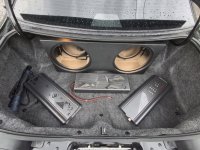
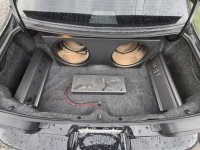
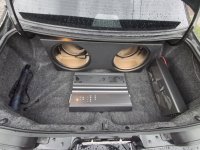
Like many of us who have been doing this for far too long, I’ve spent years hoarding old-school car audio equipment. Amps tucked away under beds and in closets, speakers sitting in boxes, and pieces picked up simply because someday they might belong in the right build.
Well, someday is finally here.
The Car
For the last several years, I’ve been looking for the right period-correct vehicle to build around. I wanted something from the era, something with enough room for a legitimately large stereo system, but also a car I could actually use. I want to be able to load it up and take it on a road trip, do something like the Hot Rod Power Tour, drive it to Cars & Coffee on a Saturday morning, and still bring it to car audio events.
I considered several cars from the era, Grand Nationals, Typhoons, and others, but finding the right example at a price that still left money for the stereo was becoming increasingly difficult.
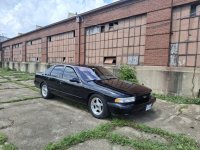
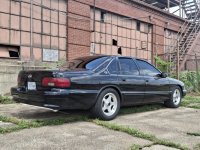
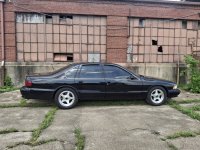
Then, in May, I found a low-mileage 1995 Chevrolet Impala SS.
For me, it checks just about every box.
More importantly, there is something about getting into a largely original 30-year-old car that transports you back in time. The long hood, huge interior, blue digital gauges, old GM switchgear, the smell, the sounds, all of it.
I don't want the stereo to take away from that experience.
I want it to add to it.
Why This Build Means Something to Me
I got into car audio more than 30 years ago, during what I still consider one of the greatest periods this hobby has ever had: the mid-1990s.
And I was incredibly fortunate that one of the shops helping push the boundaries of car audio at the time happened to be in my hometown.
I grew up near PJ’s Autosound in Erie, Pennsylvania.
As a teenager, I spent a lot of time around PJ’s and was eventually given the opportunity to work there for a while in high school doing odd jobs. Eventually, I even got to learn a little fiberglass work and helped build horn bodies for the Pro Tech Timelense.
Those years occupy a very happy little corner of my brain.
The cars that came out of PJ’s, the equipment, fabrication, sound, and sheer excess of some of those systems, made a permanent impression on me. More than three decades later, I can still picture many of those installs.
I’ve always wanted to build my own interpretation of one.
So that’s what this car is going to become.
Not a replica of any particular PJ’s vehicle, but a mid-’90s PJ’s Autosound-inspired system, using the equipment, installation techniques, and overall philosophy that made those cars so memorable to me.
That means Pro Tech speakers.
That means horns.
And, naturally, that means some enormous old PPI surfboard amplifiers.
The Equipment
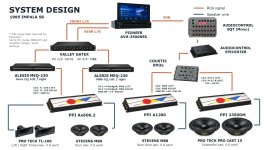
The current plan looks something like this:
Head Unit: Still undecided. I want single-DIN and period-appropriate looking, but I’m willing to cheat a little here for modern functionality. I already have a Pioneer AVH-3500NEX, and it may be a good compromise because it gives me modern features without looking completely out of place in the car.
Processing: This is probably my biggest philosophical dilemma. Do I go all-in on period-correct analog processing, AudioControl EQTs, Coustic XM-series crossovers, etc., or hide a modern DSP somewhere and pretend it doesn’t exist? I haven’t decided yet.
Amplifiers:
PPI 2530DM
PPI A1200
PPI A606
Proper old-school PPI surfboards. No compromise here.
Highs:
Pro Tech TL-106 Timelense horns. I am talking with Fred Swain about possibly 3D printing some new bodies based on my originals, fitted to the dash
Front Midbass:
Stevens Audio MB6s in the factory front-door locations
Rear Midbass:
Either Stevens Audio MB8s or Pro Tech CH8s in the factory rear-deck locations
Subwoofers:
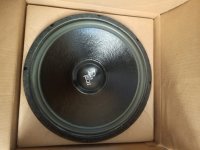
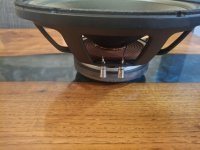
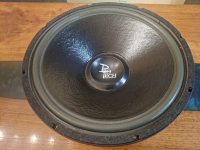
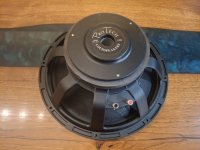
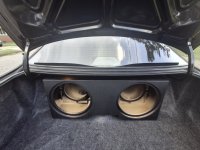
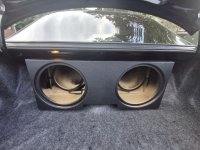
Pro Tech Pro Cast 15s, single 4-ohm
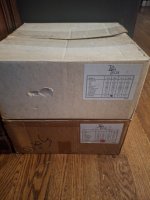
The Pro Casts are still BNIB, and I have spares, which is probably a sentence that perfectly illustrates why I've been accused of hoarding old car audio equipment.
The Philosophy
There is one important distinction with this build:
I am not trying to build the best possible car audio system that can be built in 2026. If that were the goal, the equipment list would look completely different.
I want to build something that captures what a really good, over-the-top mid-1990s car audio system felt like.
The installation will borrow heavily from the techniques and styling I remember from PJ’s Autosound during that period, but I also want to maintain the character of the Impala. The car is remarkably original and has never been significantly modified, so anything I do inside the passenger compartment needs to be either hidden or reasonably reversible.
I don't want to get into the car and feel like I'm sitting in a 1995 Impala that somebody installed a 2026 stereo into.
I want to open that enormous door, drop into the seat, turn the key, fire up the stereo and, for a little while, feel like it's 1996 again.
There may be a few carefully hidden concessions to modern technology where they make sense, but perfect measurements and absolute technical accuracy aren't the primary objective here.
The goal is to make it sound as good as I can make a ridiculous mid-’90s system built around 30-year-old equipment sound.
Big horns. Big midbass. Big amplifiers. Big subs.
After more than 30 years, I think it’s finally time to build the system that teenage me would have stared through the window at PJ’s Autosound dreaming about.
Let the hoarding finally pay off.
I think I finally found mine.
Like many of us who have been doing this for far too long, I’ve spent years hoarding old-school car audio equipment. Amps tucked away under beds and in closets, speakers sitting in boxes, and pieces picked up simply because someday they might belong in the right build.
Well, someday is finally here.
The Car
For the last several years, I’ve been looking for the right period-correct vehicle to build around. I wanted something from the era, something with enough room for a legitimately large stereo system, but also a car I could actually use. I want to be able to load it up and take it on a road trip, do something like the Hot Rod Power Tour, drive it to Cars & Coffee on a Saturday morning, and still bring it to car audio events.
I considered several cars from the era, Grand Nationals, Typhoons, and others, but finding the right example at a price that still left money for the stereo was becoming increasingly difficult.
Then, in May, I found a low-mileage 1995 Chevrolet Impala SS.
For me, it checks just about every box.
More importantly, there is something about getting into a largely original 30-year-old car that transports you back in time. The long hood, huge interior, blue digital gauges, old GM switchgear, the smell, the sounds, all of it.
I don't want the stereo to take away from that experience.
I want it to add to it.
Why This Build Means Something to Me
I got into car audio more than 30 years ago, during what I still consider one of the greatest periods this hobby has ever had: the mid-1990s.
And I was incredibly fortunate that one of the shops helping push the boundaries of car audio at the time happened to be in my hometown.
I grew up near PJ’s Autosound in Erie, Pennsylvania.
As a teenager, I spent a lot of time around PJ’s and was eventually given the opportunity to work there for a while in high school doing odd jobs. Eventually, I even got to learn a little fiberglass work and helped build horn bodies for the Pro Tech Timelense.
Those years occupy a very happy little corner of my brain.
The cars that came out of PJ’s, the equipment, fabrication, sound, and sheer excess of some of those systems, made a permanent impression on me. More than three decades later, I can still picture many of those installs.
I’ve always wanted to build my own interpretation of one.
So that’s what this car is going to become.
Not a replica of any particular PJ’s vehicle, but a mid-’90s PJ’s Autosound-inspired system, using the equipment, installation techniques, and overall philosophy that made those cars so memorable to me.
That means Pro Tech speakers.
That means horns.
And, naturally, that means some enormous old PPI surfboard amplifiers.
The Equipment
The current plan looks something like this:
Head Unit: Still undecided. I want single-DIN and period-appropriate looking, but I’m willing to cheat a little here for modern functionality. I already have a Pioneer AVH-3500NEX, and it may be a good compromise because it gives me modern features without looking completely out of place in the car.
Processing: This is probably my biggest philosophical dilemma. Do I go all-in on period-correct analog processing, AudioControl EQTs, Coustic XM-series crossovers, etc., or hide a modern DSP somewhere and pretend it doesn’t exist? I haven’t decided yet.
Amplifiers:
PPI 2530DM
PPI A1200
PPI A606
Proper old-school PPI surfboards. No compromise here.
Highs:
Pro Tech TL-106 Timelense horns. I am talking with Fred Swain about possibly 3D printing some new bodies based on my originals, fitted to the dash
Front Midbass:
Stevens Audio MB6s in the factory front-door locations
Rear Midbass:
Either Stevens Audio MB8s or Pro Tech CH8s in the factory rear-deck locations
Subwoofers:
Pro Tech Pro Cast 15s, single 4-ohm
The Pro Casts are still BNIB, and I have spares, which is probably a sentence that perfectly illustrates why I've been accused of hoarding old car audio equipment.
The Philosophy
There is one important distinction with this build:
I am not trying to build the best possible car audio system that can be built in 2026. If that were the goal, the equipment list would look completely different.
I want to build something that captures what a really good, over-the-top mid-1990s car audio system felt like.
The installation will borrow heavily from the techniques and styling I remember from PJ’s Autosound during that period, but I also want to maintain the character of the Impala. The car is remarkably original and has never been significantly modified, so anything I do inside the passenger compartment needs to be either hidden or reasonably reversible.
I don't want to get into the car and feel like I'm sitting in a 1995 Impala that somebody installed a 2026 stereo into.
I want to open that enormous door, drop into the seat, turn the key, fire up the stereo and, for a little while, feel like it's 1996 again.
There may be a few carefully hidden concessions to modern technology where they make sense, but perfect measurements and absolute technical accuracy aren't the primary objective here.
The goal is to make it sound as good as I can make a ridiculous mid-’90s system built around 30-year-old equipment sound.
Big horns. Big midbass. Big amplifiers. Big subs.
After more than 30 years, I think it’s finally time to build the system that teenage me would have stared through the window at PJ’s Autosound dreaming about.
Let the hoarding finally pay off.
Last edited: